Best Garage Doors for San Diego's Coastal Climate
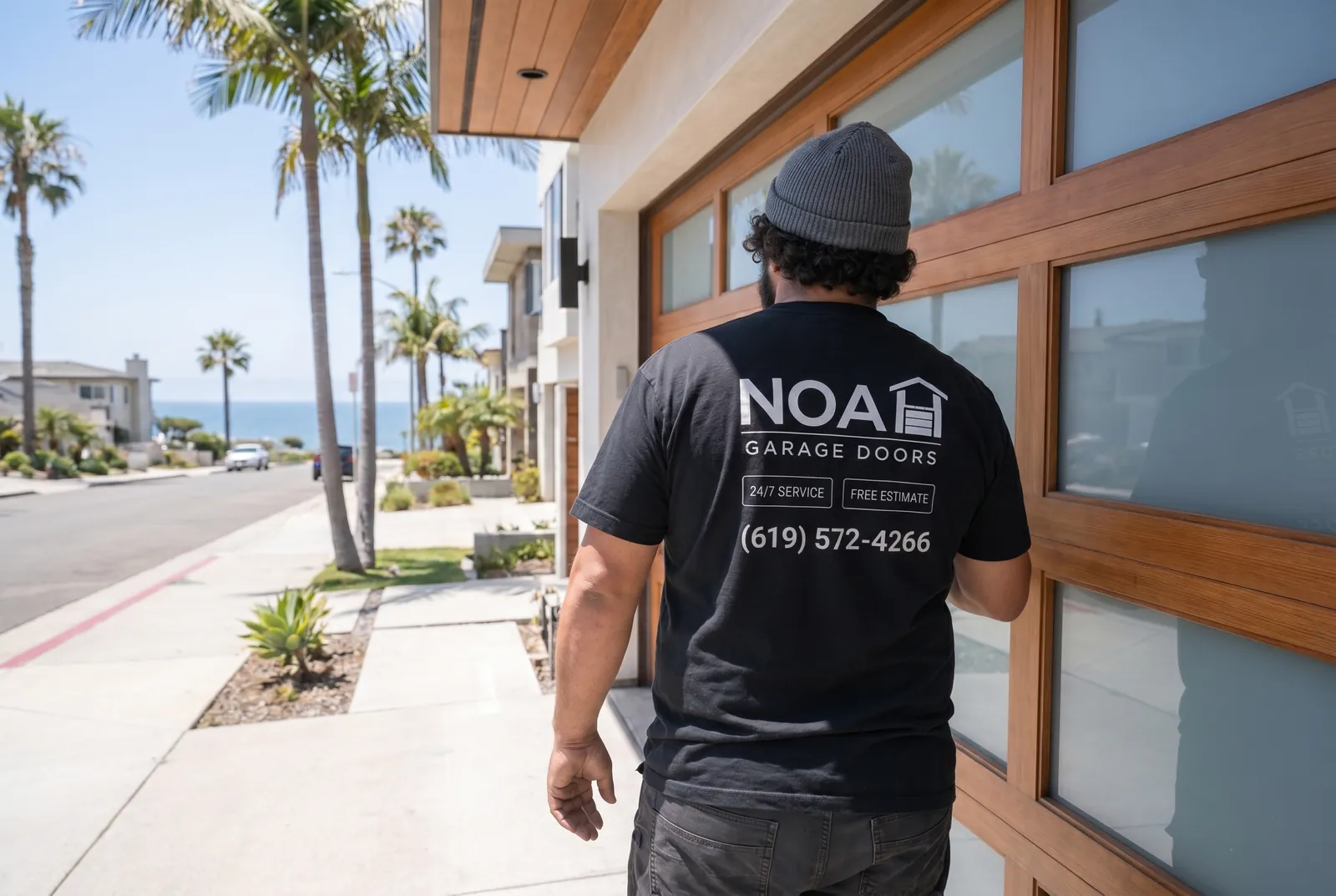
San Diego's coastline is one of the most desirable places to live in the country. But if your home sits in Pacific Beach, La Jolla, Ocean Beach, Del Mar, or anywhere within a mile or two of the water, your garage door is fighting a daily battle against salt air, UV radiation, and the relentless moisture cycling of the marine layer. That combination corrodes metal, chalks paint, dries out rubber seals, and wears moving parts far faster than anything you'd see ten miles inland.
I've replaced and repaired hundreds of coastal garage doors across San Diego County. The homeowners who chose the right material and hardware from the start, and who kept up with maintenance, are still enjoying the same door 15 or 20 years later. The ones who bought a builder-grade steel door and ignored it for a decade end up calling me with a door that's seized up, spotted with rust, and rattling loose at every panel joint. This guide tells you exactly what to buy and how to take care of it.
Why Coastal San Diego Is Hard on Garage Doors
Salt air is the biggest factor. Within about a mile of the ocean, salt particles suspended in the air settle on every exposed metal surface. Left in place, they accelerate electrochemical corrosion on springs, cables, hinges, and any unprotected steel. The damage starts on the inside: corrosion begins inside a coil spring or inside a cable's wire bundle, and by the time you can see surface rust, the component is already weakened.
Ultraviolet radiation is the second factor. San Diego sees roughly 280 sunny days a year, and that UV load fades paint, chalks and cracks powder coatings, dries out weatherstripping, and degrades rubber rollers. Marine layer fog adds a moisture cycle on top: surfaces wet every morning and dry by noon go through repeated expansion and contraction that works paint loose and opens micro-cracks where salt can reach bare metal.
The high-exposure neighborhoods include Ocean Beach, Mission Beach, Pacific Beach, La Jolla Shores, Del Mar, Encinitas, and Carlsbad. San Diego's prevailing westerly winds also push salt further inland than most people expect, so areas like Kensington, North Park, and even parts of Escondido benefit from choosing corrosion-resistant materials.
Best Garage Door Materials for Salt Air
Not all garage doors are created equal near the water. Here is how the main options compare for coastal San Diego conditions.
Aluminum
Naturally rust-proof. The best choice for homes right on the water. Lighter than steel, which reduces strain on springs and openers. More prone to denting on impact.
Galvanized Steel
Excellent when the factory finish stays intact. Touch up chips and scratches promptly. Offers more dent resistance than aluminum at a lower price point.
Fiberglass / Composite
Resists corrosion, moisture, and UV as well as aluminum. Can mimic a wood-grain finish convincingly. Higher initial cost; can become brittle in sustained cold (rarely an issue here).
Wood
Beautiful, but the highest-maintenance option. Salt air and marine fog attack the finish quickly. Needs refinishing every two to three years near the coast. Best replaced with fiberglass wood-grain.
For a new garage door installation in San Diego, here are the cost ranges you can expect. Every figure below comes from current San Diego market rates:
| Door Configuration | Installed Cost (2026) |
|---|---|
| Single-car door, installed | $1,200 to $2,800 |
| Double-car door, installed | $1,800 to $4,500 |
| Full range (any new door, installed) | $1,200 to $4,500 |
Hardware Matters Just as Much as the Door Panel
Even the best aluminum or fiberglass door will fail early if the springs, cables, and hardware are standard bare steel. For coastal homes, I strongly recommend upgrading these components at installation or during the next service visit.
- Galvanized torsion springs. Standard springs are bare steel and corrode quickly near salt air. Upgrading to galvanized torsion springs costs more up front but pays for itself in a significantly longer lifespan.
- Galvanized lift cables. Your garage door cables carry the full weight of the door hundreds of times a week. Corroded cables fray and can snap without warning, and replacement under spring tension is a job for a professional. Start with the best cable available.
- Sealed nylon rollers. Steel rollers corrode and get noisy. Sealed nylon rollers won't rust, run quieter, and last longer in a salt-air environment. They're an easy upgrade during any service visit.
- Rust-inhibiting lubricant. Apply a lithium grease or silicone-based spray to hinge pins, roller stems, and the torsion bar bearing plates every six months. Avoid WD-40 on garage door hardware: it displaces water but attracts grit and does not protect against long-term corrosion.
Choosing the Right Style for Coastal San Diego Architecture
Coastal San Diego neighborhoods tend toward lighter, brighter finishes: whites, sandy tones, light gray, and blue-gray for traditional beach homes; charcoal or dark bronze trim for contemporary builds. Lighter colors run cooler under direct sun, which reduces thermal expansion stress on panel joints and weatherstripping seals.
For architectural fit, consider these pairings:
- Carriage-house raised panel with decorative hardware suits craftsman bungalows and Spanish colonials throughout Ocean Beach and North Park.
- Flush or narrow-line steel suits contemporary and mid-century modern homes, which are common throughout Pacific Beach and Mission Hills.
- Full-view aluminum-framed panels with glazed or frosted glass sections have become popular in La Jolla and Coronado for their clean, modern look and natural salt-air durability.
Matching the door's color and profile to your home's trim, rather than its main wall color, usually gives the cleanest visual result and holds up better because trim colors tend to be more durable factory finishes.
How Often to Maintain a Coastal Garage Door
Inland San Diego homeowners can typically go 12 months between service visits. For coastal homes, especially within a mile of the ocean, I recommend scheduling a garage door maintenance tune-up every six months. A professional service visit covers:
- Spring tension and any sign of rust or wear on coil surfaces
- Cable condition, looking for fraying or kinking that signals early corrosion
- Roller and hinge movement, lubrication, and visible corrosion
- Weatherstripping integrity: salt air and UV degrade rubber seals quickly, and a failing seal lets moisture and salt into the garage
- Balance test and opener force settings, which drift as components wear
Between professional visits, lubricate the hardware yourself every six months using a lithium or silicone spray. Do a quick visual check on springs and cables for surface rust. If you spot rust pitting on a spring, call for service promptly. Springs that have corroded through on the interior coils can snap without warning, and a snapped spring can damage the door, the car, or injure someone nearby.
Frequently Asked Questions
Aluminum and coated steel are the top choices for coastal San Diego. Aluminum is naturally rust-proof, making it ideal for homes right on the water in areas like Pacific Beach or La Jolla Shores. Galvanized steel with a factory powder coat is also an excellent choice if you stay on top of touch-ups on any chips or scratches. Fiberglass and composite doors resist salt air well too. Wood is beautiful but requires significant upkeep in salty, humid conditions and is not recommended for homes close to the ocean.
Coastal San Diego homeowners should schedule a tune-up and safety inspection every six months. Salt air accelerates wear on springs, cables, and hardware, so twice-yearly service helps catch corrosion early before it causes a breakdown. Homeowners further inland can typically go 12 months between visits. Between professional checks, lubricate hinges and rollers twice a year with a lithium or silicone-based lubricant.
A standard opener works fine, but corrosion-resistant hardware is a smart upgrade in coastal conditions. When buying a new opener, look for units with a sealed motor housing and corrosion-resistant drive components. Belt-drive openers have fewer exposed metal parts than chain-drive models and tend to fare better in humid, salty air. Noah can recommend and install the right unit for your home.
Wood is possible but demanding in coastal conditions. Salt air and UV cause wood to swell, crack, and shed paint faster than in any other local climate. Real wood near the coast typically needs refinishing every two to three years. If you love the wood aesthetic, a fiberglass door with a wood-grain embossed finish gives you the same look with far less maintenance and far better durability against salt air.
Our Garage Door Services in San Diego
About Noah Garage Doors: Locally owned and operated, serving all of San Diego County. Call or text (619) 572-4266 or email Noahgaragedoors@gmail.com.